Christopher C. Robbins: Oregon Architect

Several years ago I was contacted by someone with the Clackamas County Historical Society about Christopher Carll Robbins, a noted Portland area architect.  In fact, Robbins had designed the Stevens-Crawford Heritage House in Oregon City which is one of the museums run and maintained by the historical society.  Then began some research into his life and some of his architectural accomplishments.
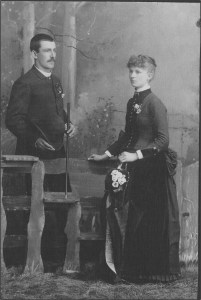
Chris & Anna Robbins

Chris Robbins was a son of Nathaniel Norval and Permelia Ann (Bird) Robbins, and a grandson of Nathaniel and Nancy Robbins.  He was born in 1866 in Stafford, Oregon, just to the northwest of present-day Wilsonville, and was married to Anna Holcomb in 1887 with his brother Oren Decatur Robbins as one of the witnesses.

In 1887 C. C. and Anna Robbins appear in Seattle, Washington, in a state census.  Chris is listed as a 21-year-old machinist.  Anna is 19.  They are listed there again in 1889.  Since the 1890 federal census hasn’t survived it is nice to have at least these state censuses to locate our family members between 1880 and 1900.

In an interview with the noted Oregon journalist Fred Lockley he reminisced about his background:

“When I was 17 [c1883] I came to Portland and secured work in a sash and door factory owned by J. C. Carson.  I followed that trade for the next 21 years, meanwhile studying architecture.  In my late 30s I hung out my shingle as an architect, since which time I have planned and built hundreds of houses in Portland.” (“Observations of a Journal Man,” Oregon Journal, 9 December 1933)

An undated photograph of the employees of the J. C. Carsons’ Sash and Door Factory in Portland shows C. C. Robbins in the top row, second from the right, and listed as a “machine hand” which is also the occupation he is listed as in the 1900 census.  Perhaps the photo was taken around the same time.
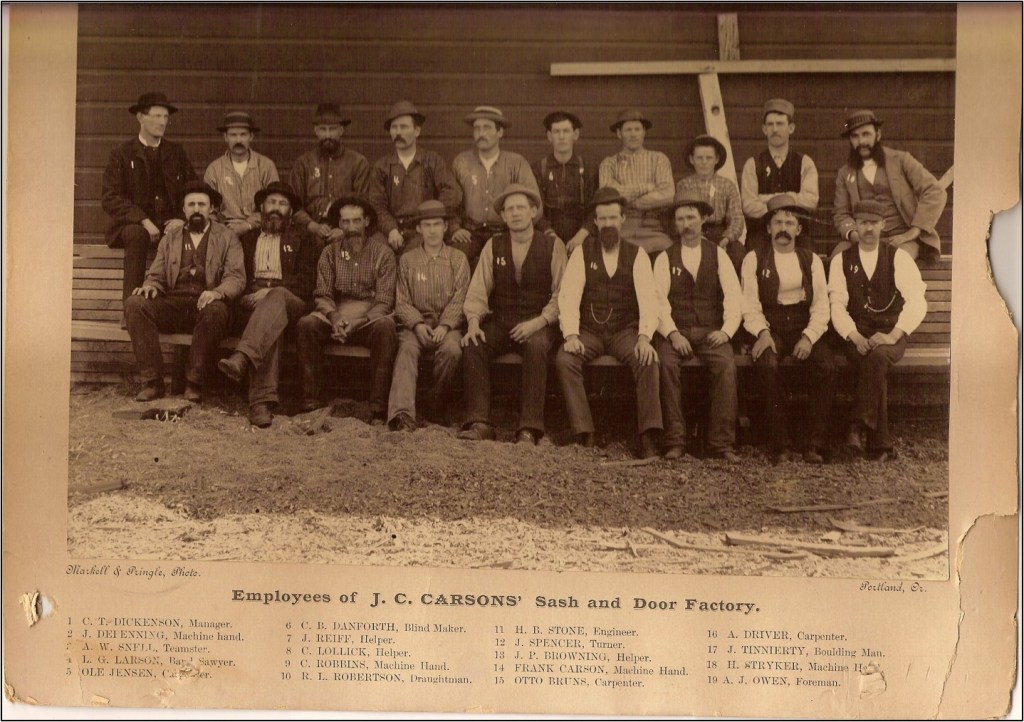
Chris Robbins (#9 – 2nd from right, back row)

He mentions “studying” architecture but I don’t know if he received formal schooling or read and studied architecture from books and observing others.  In the early 1900s he begins to show up in newspaper articles as being an architect and designer of houses and buildings.  A foreman of the Carson Sash and Door Factory, Holly A. Cornell, went on to be an architect in the 1890s.  Perhaps Chris followed the same path: machinist to architect?  In the 1910 census his occupation is given as “architect” as it was for the following census years of 1920 and 1930.  His death certificate listed him as a “builder.”

Another excerpt from his interview by Fred Lockley:

“In 1896 Mr. Hubbard, superintendent of the fish hatcheries in Oregon at that time, employed me to build a fish hatchery on the Little White Salmon.  The hatchery was located about a mile and a half above the mouth of the Little White Salmon.  When we had the fish racks and traps built a large number of Klickitat Indians came down for their yearly salmon catch.  They were very much upset at the sight of the racks and traps.  They threatened to tear out the racks.  John Talbot of Clackamas was in charge of the fish-taking gang.  He wanted us to get out our guns and shoot the first Indian that touched a salmon or bothered the fish traps.  I finally persuaded him that it would simply mean that the Indians would wipe us out if we shot them.  There were 17 white men and several hundred Indians.  I persuaded Talbot to send word to the military authorities at Vancouver.  An officer came up and held a pow-wow with the chief of the Klickitats.  The difficulty was settled by our turning over to the Indians all of the salmon after the eggs had been extracted.  They never had so many fish in their lives.  They gave us arrow points, moccasins and buckskin gloves and offered us dried salmon.”

I was not able to find contemporaneous confirmation of this story at White Salmon (which is located on the north side of the Columbia River in Washington State) though I did find an article from 1896 where W. F. Hubbard, superintendent of the fish hatchery on the Clackamas river, discusses the number of salmon hatched that year and that “the upper Clackamas hatchery is a success and that the Indians do not distrust the fish in the upper river now, much preferring to take the fish after same have been relieved of the eggs by the hatchery people…”  (Oregon Courier, Oregon City, Ore., 8 May 1896).

The earliest newspaper mention I can find of Chris Robbins is in 1899, when the McMinnville, Oregon, newspaper, The Yamhill County Reporter, mentions that: “Chas. P. Nelson has the draft for his new residence, fresh from the pen of Mr. Robbins, the architect.  It will be a very neat residence, and will cost about $900.”
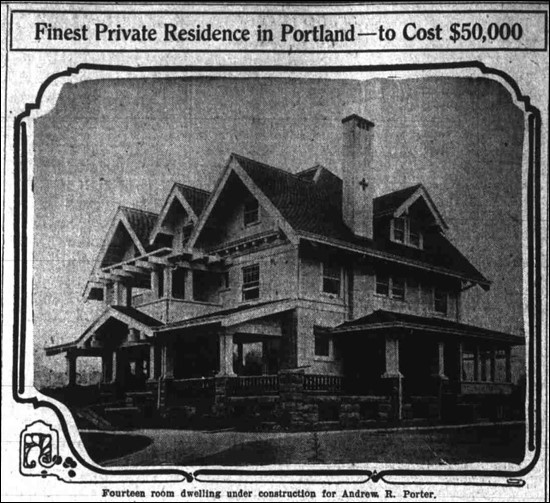
One of many houses designed by Chris Robbins

Some of the existing buildings he is credited with designing include Roswell Conner House in McMinnville (1905), Oregon City Masonic Lodge (1907), and the Masonic Building in McMinnville (1913).  This information is obtained from the Oregon Historic Site Records of the Oregon Historic Preservation Office.

More information comes from numerous newspaper articles such as: “Architect C. C. Robbins has completed plans for a new edifice for the Central Christian Church, which will cost between $45,000 and $50,000, to be built at East Twentieth and East Salmon Streets.”  (see drawing below) (Sunday Oregonian, 12 July 1908, sec. 3, p. 4, col. 3-6)
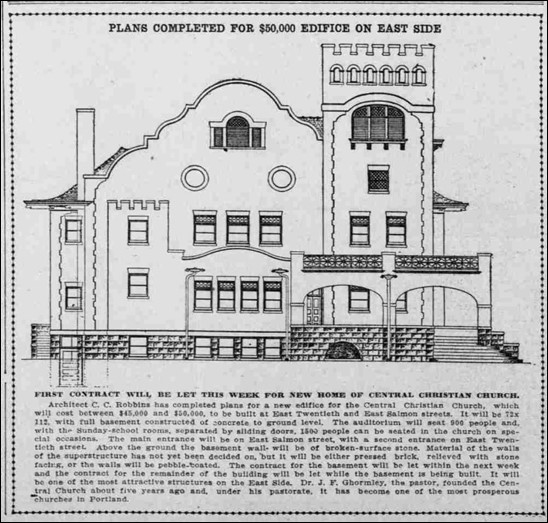
Church designed by Chris Robbins

There is also mention of a home being built for the Robbins family and you must wonder if Chris didn’t design it himself: “A handsome 2½-story dwelling is being built for C. C. Robbins at East Twentieth and Everett Streets.  The cost will be about $3,000.”  (Oregon Daily Journal, 15 April 1906, sec. 2, p. 32, col. 4)

We also find this news article: “House Burglarized – Jewelry of the value of about $150 was taken from the home of C. C. Robbins 67 East Twentieth street north, yesterday afternoon, while Mr. Robbins and other members of the family were at the automobile races.  Entrance to the home was gained by breaking a plate glass in the side door.” (Oregon Daily Journal, 10 July 1912, p. 9, col. 2)

Entry in the 1914 Portland City Directory

Later in 1916 Chris has added more to his resume: “C. C. Robbins, architect, has joined J. H. Hill and is engaged in the manufacture of billiard, pool and bowling alley supplies and ivory, fiber and wood novelties at 302 Pine Street.” (Oregon Daily Journal, 21 Oct. 1916, p. 9, col. 4-5).

Archie Robbins (1896-1939)

Chris and his wife Anna were the parents one son, Archie Robbins.  About his son Chris told Fred Lockley:  “My son, Archie, is an expert toolmaker.  His health became wrecked while in the service during the World war and he is in the veterans’ hospital at American Lake [Washington].”  Sadly, Archie was a pedestrian struck and killed by a car in Tenino, Washington, in 1939.

Christopher Robbins died in January of 1943 and Anna did not long outlive him, dying six months later in June.  Both are buried in Lincoln Memorial Park in Portland.

[Jacob Robbins-William Robbins-Nathaniel Robbins-Nathaniel Norval Robbins-Christopher Carll Robbins]

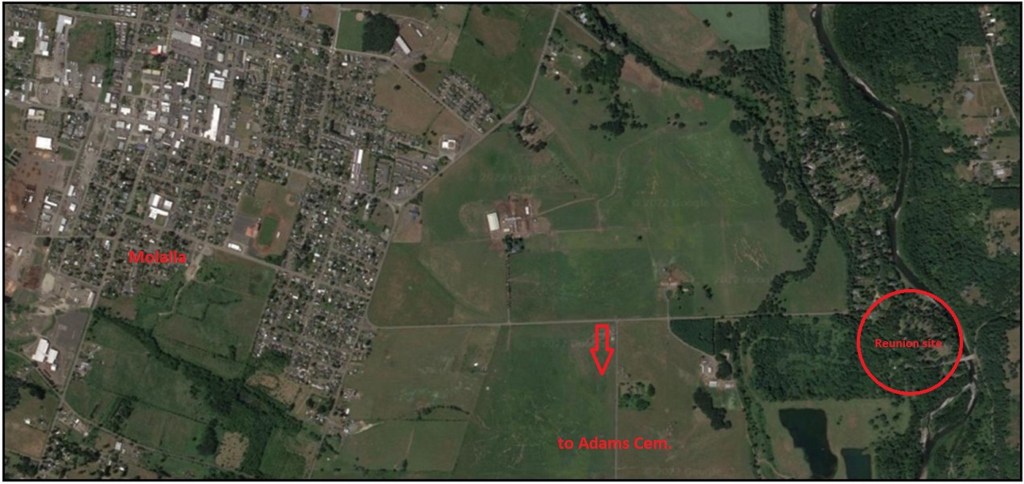
2025 Robbins Reunion in Oregon

On Sunday, July 20th, 2025, there will be a Robbins Reunion in Molalla, Oregon.  Meeting again at Feyrer County Park just outside of Molalla this reunion is open to anyone related to the Robbins family who would like to come and visit and share family history.

We have had Oregon Robbins reunions in 2023 and 2024, following a very successful bicentennial reunion in Decatur County, Indiana, in the summer of 2022.  We may not have reunions every year again but we will at least this year!

The park is located about 3 miles east of Molalla on S. Feyrer Park Road.  From downtown Molalla take E. Main Street to E. Mathias Road, travel south on that road a couple of blocks, and then turn east on S. Feyrer.  That road takes you to the park.  Picnic #2 is once again where the Robbins family will be gathering.  Be aware that there is an $9 parking fee (the fee increased in 2025).  Molalla is about 15 miles east of Interstate-5 at Woodburn or 16 miles south of 99E at Oregon City.

Even if you cannot come to this reunion, it would help if anyone reading this blog could pass along the word to anyone they think might be interested.  Getting word out is the key to a successful reunion.

There is a Facebook event page for anyone who would like to follow the reunion there (you can always “friend” me for an invite); and I have created an email mailing list.  If you would like to be included on the email list be sure to let me know by sending a message to:  oregonrobbinsreunion@gmail.com

Robbins Reunion, Research & Writing Posts

2024 Oregon Robbins Reunion

As a reminder to all those interested and in proximity, the 2024 Oregon Robbins Reunion will be held on Sat., July 20th, at Feyrer County Park, Picnic Area #2, just outside of Molalla, Oregon. This reunion is open to anyone related to the Robbins family would like to come and visit and share family history.

You can find more information at my blog post from last fall here. Feel free to contact me either through the blog or the email below if you have questions.

Robbins Family Research and Blog Posts

I’m quite behind in blog posts the past nine months for a wide variety of reasons. My Robbins research has been focusing on land records (particularly Breckinridge Co., Kentucky and Marion Co., Oregon) which don’t lend themselves (usually) to entertaining stories (though sometimes they do).

Breckinridge County, Kentucky, has fascinated me as the number of family members there is only surpassed by Decatur County, Indiana. Only a few of the early Robbins family members moved down to Kentucky from Indiana, but they were quite prolific, with the early heads of household being Absalom Robbins, Jr., Hardin Robbins, and Micajah Robbins Jr.

Besides the number of people to research, Breckinridge County includes some of the most interesting first names you can find in the family: Prayles, Joranda, Bourbon, Erie, Vermont, and Lafayette, and you can sometimes determine the political heroes of parents as they gave their children such names as: Zachary Taylor, George Washington, Henry Clay, Millard Fillmore, and Harrison.

Among the surnames who married into these Robbins families are: Stillwell, Ryan, Armes, Basham, Macey (or Maysey), Swink, Knott, Allen, Hampton, Hanks, Roberts, Jolly, Norton, Haynes, Dowell, Hubbard, and many more. And a number of these surnames have multiple connections to the Robbins family. Thus is a lot of research to be done in a very small amount of free time.

But I will continue to write up stories and findings as I am able, so stay with me!

Robert Bird Cemetery (Clackamas County, Oregon)

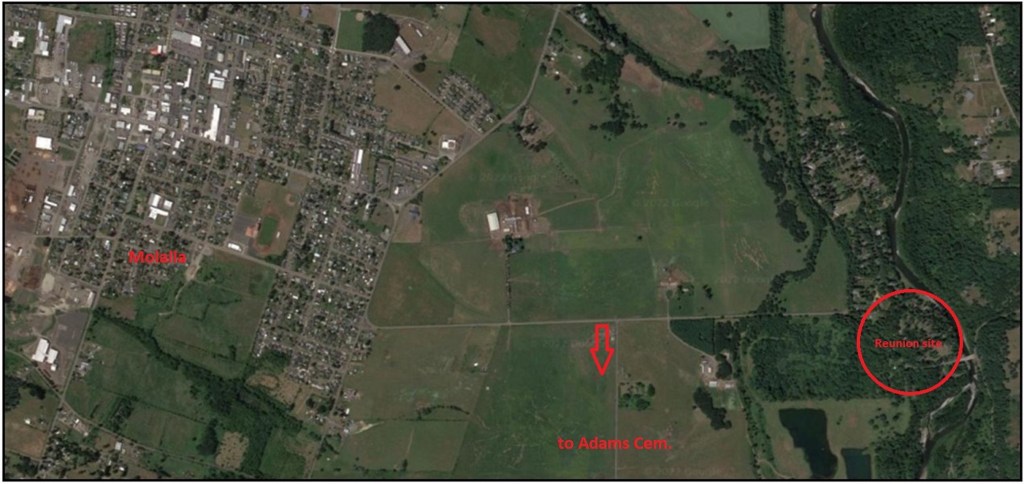
Last year, prior to the 2023 Robbins Reunion in Oregon, I posted about the Adams Cemetery which is very near the reunion location.  This year I thought I would post about the Robert Bird Cemetery, also important to Robbins family history, which is not far away – and, in fact, is easily accessed off of Interstate 5.  While the Molalla Cemetery held Jacob and Sarah Robbins and their descendants, the Robert Bird Cemetery held Nathaniel and Nancy Robbins and many of their family.

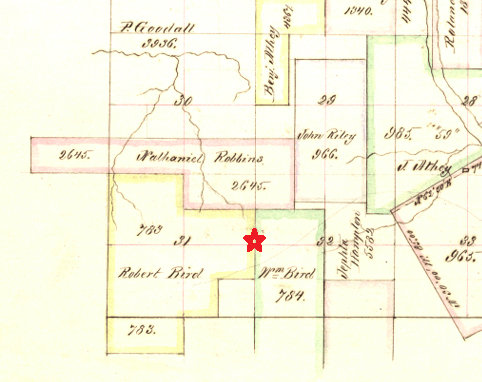
Location of the Bird Cemetery, between Gage and Newland roads

The cemetery was located on the very eastern edge of a part of Robert and Rachel Bird’s large landholding in Clackamas County.  Bird was surrounded to the north, west, and south by members of the Robbins family on their respective Donation Land Claims.

red star indicates approximate location of the Bird Cemetery

The burial of a Robbins in the cemetery that can be confirmed is that of William Franklin Robbins who died in May of 1856 after a hunting accident.  I’ve quoted this reminiscence from his daughter Melissa before but it’s worth sharing again:

“But how soon happiness can be turned to sorrow for when I was but four years old Father was taken from us by death in the accidental discharge of his gun while trailing a Bear in company with his Brothers, tho so young I could always remember seeing his body carried from the forest and of being lifted up to view him for the last time as he lay in his casket.  There being no horse teams in our community except Grandfathers [Nathaniel Robbins] which  hitched to a wagon in which was placed the casket and in which Mother [Melvina], baby sister [Artemissa] and I also rode with the rest of the crowd walking we proceeded to the Cemetery one half mile distant and there without a Minister of God to offer a last prayer or to speak one word of comfort to the grief stricken ones his body was laid to rest and while I was too young to realize my loss yet Mother’s heart broken sobbings at that time has followed me through life.”
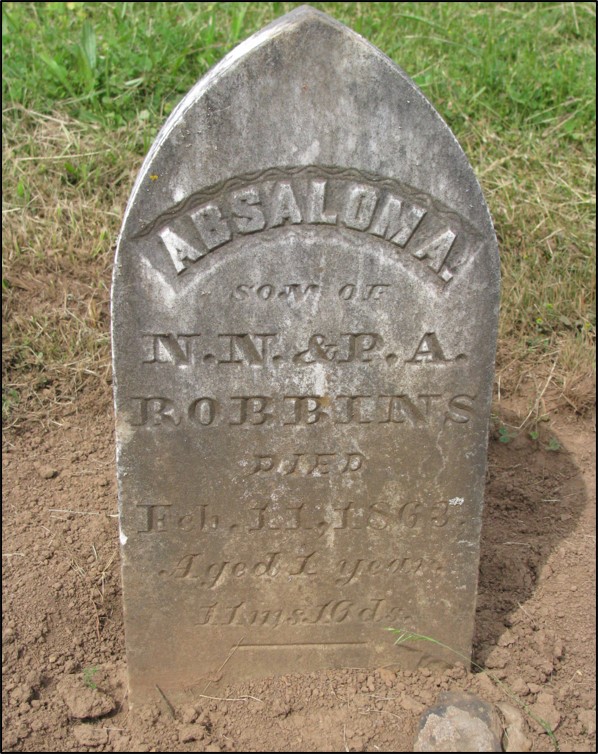
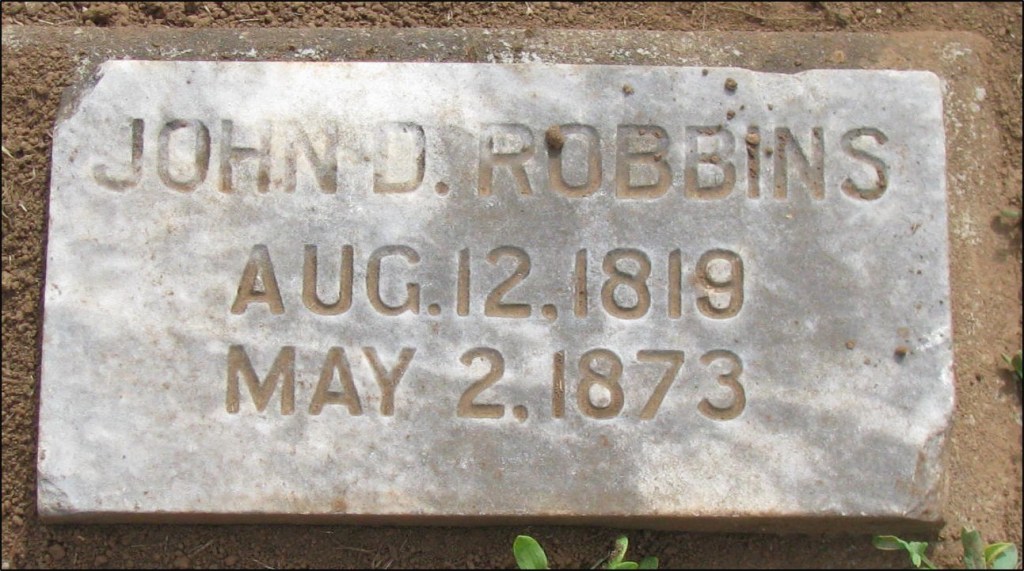
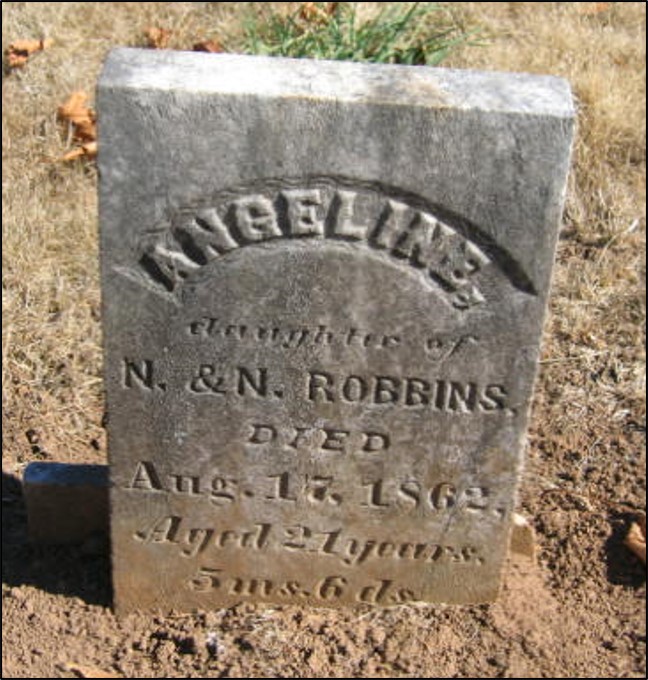
The next earliest burial is that of William’s youngest sister Angeline Robbins, who died in 1862 at twenty-one; then came a young son of Nathaniel Norval Robbins, Absalom Allen Robbins, in 1863.  The patriarch himself, Nathaniel Robbins, drowned in December of 1863, and his grave is marked with a large gravestone.  His daughter Nancy (Robbins) Barstow followed in 1872 as did bachelor son John Dow Robbins in 1873.  A young son of Nathaniel Norval Robbins, Absaloma Allen Robbins, died and is buried there in 1863.

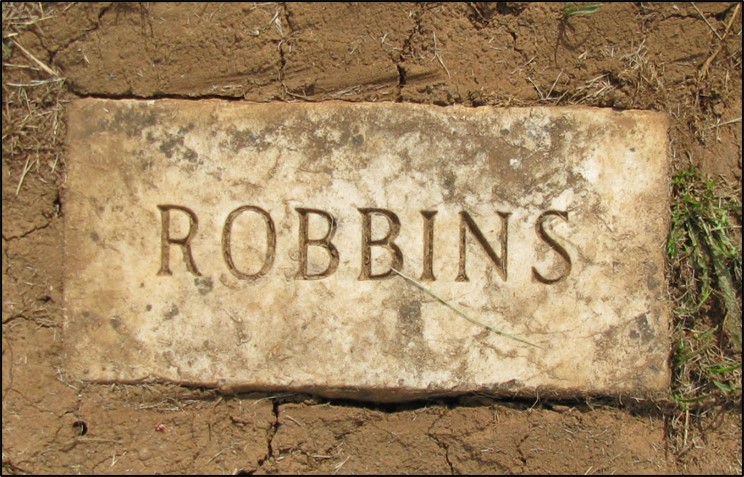
We also have a few mysteries.  There are three gravestones which just say “Robbins.”  These are most likely Nathaniel Spencer (“Nat”) Robbins, William Franklin’s oldest son, who died in 1895, and his first wife Sarah Evans Robbins, who died in 1880.  These two graves, and the other one marked “Robbins”, are next to the gravesites (according to the cemetery map) of Evans family members, such as Sarah’s parents John and Elizabeth Evans.  It’s possible that the third “Robbins” gravestone is either for Nat’s second wife Martha Rodgers (death date unknown) or for William Berry Robbins, Nat’s youngest son, who died in 1924 at the Oregon State Hospital in Salem.  His death certificate simply says his body was removed to “Oregon City” which is near the Robert Bird Cemetery.  Note that the website FindAGrave mistakenly gives two of these “Robbins” gravestones erroneous names.  Someone simply copied a name from the cemetery map which was not that of a Robbins family member.

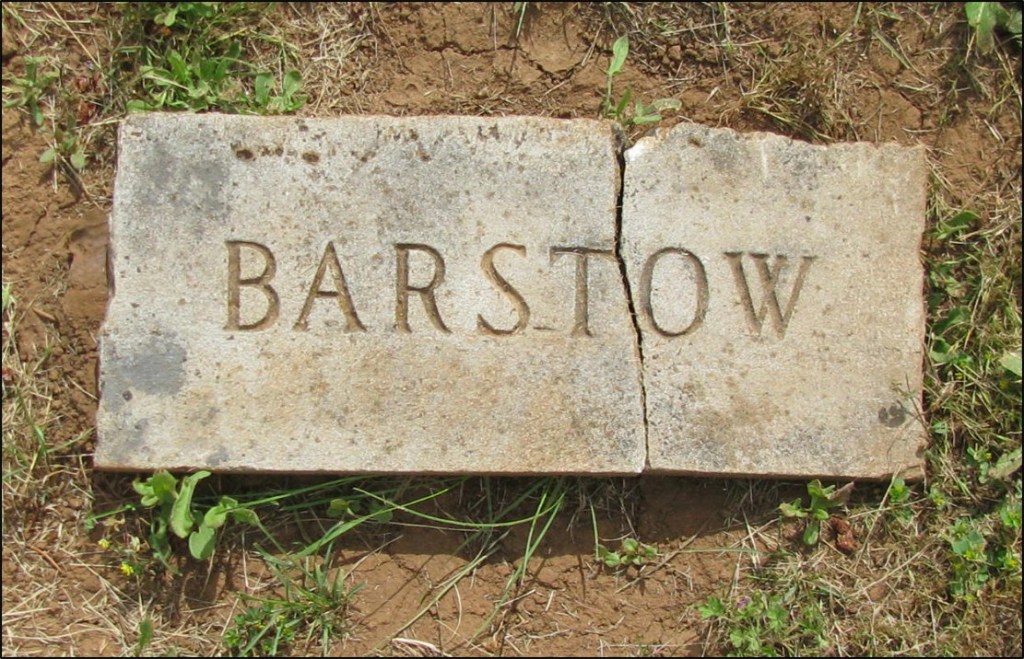
There are also a couple of gravestones simply marked “Barstow” but it is believed there should be about five Barstow burials there.  Nancy Robbins, daughter of Nathaniel and Nancy, was married to Joseph Barstow in 1856, just a month after her brother William’s death.  Nancy died in 1872 while Joseph lived until 1915.  Three children died in infancy or in their teenage years:  Grace Lillian (1863), Harriet Permelia (1872), and Eugene Leroy (1876).  It is likely all three are buried in the Robert Bird Cemetery.

Another mystery:  Melvina Myers, wife of William Franklin Robbins, was married to Robert Lavery after William’s death.  Yet, she is buried as “Melvina Robbins” in the cemetery.  There is no evidence of divorce.  Was it an unhappy marriage? or was there bad feeling between Melvina and step-children after Robert died in 1867.

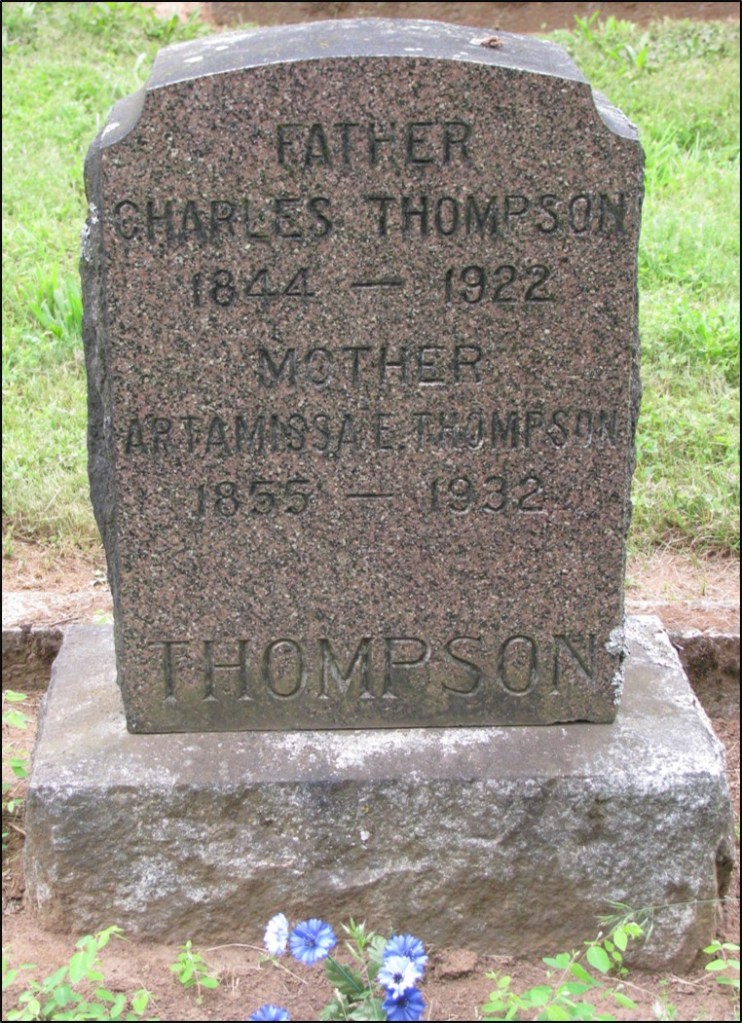
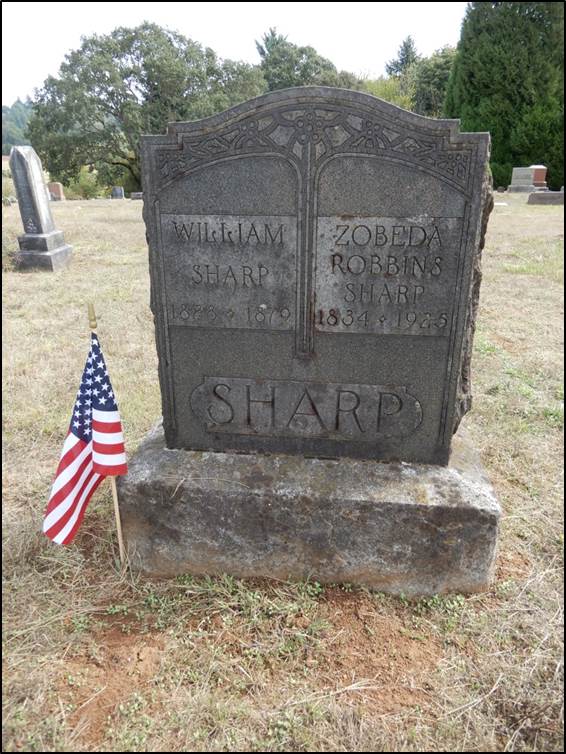
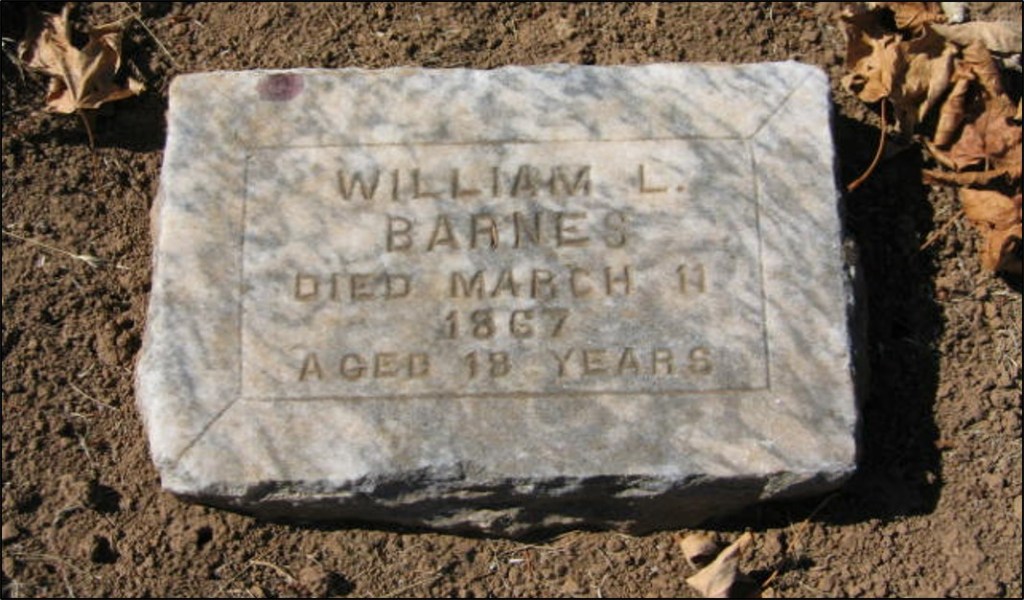
So, Nathaniel and Nancy Robbins were buried in the cemetery, as were their children William Franklin Robbins, John Dow Robbins, Nathaniel Norval Robbins, Zobeda (Robbins) Sharp, Nancy (Robbins) Barstow, and Angeline Robbins.  Of the grandchildren buried in the Robert Bird Cemetery we have:  Nathaniel Spencer Robbins (likely), Artemissa Ellen (Robbins) Thompson (my great-grandmother), Nathaniel Norval Barnes, William Barnes, Absalom Allen Robbins, Alfred Cotton Sharp, Oliver Perry Sharp, Samuel Franklin Sharp, Minerva (Sharp) Mayes, Nancy Melinda Sharp, Edward L. Sharp, Walter Scott Sharp, Dora Sharp (likely), Annaretta (Sharp) Priester, and Kate (Sharp) Jones, and their respective spouses and some of their children and grandchildren.

In 2019 a plaque was installed by the Daughters of the American Revolution, Tualatin Chapter, honoring Nathaniel Robbins, a member of Oregon’s Constitutional Convention, and Robert and Rachel Bird, the original owners of the land on which the cemetery is situated.  You can read my blog post about that here.

And finally, here are some additional photos from the Robert Bird Cemetery:

Herren Family Cemetery (Marion County, Oregon)

The Herren Family Cemetery is an interesting one – for many, many years you needed to get a state prison official to escort you to the cemetery.  The reason being:  the property was owned by the State of Oregon and was used by the Oregon State Penitentiary’s as part of their Farm Annex.

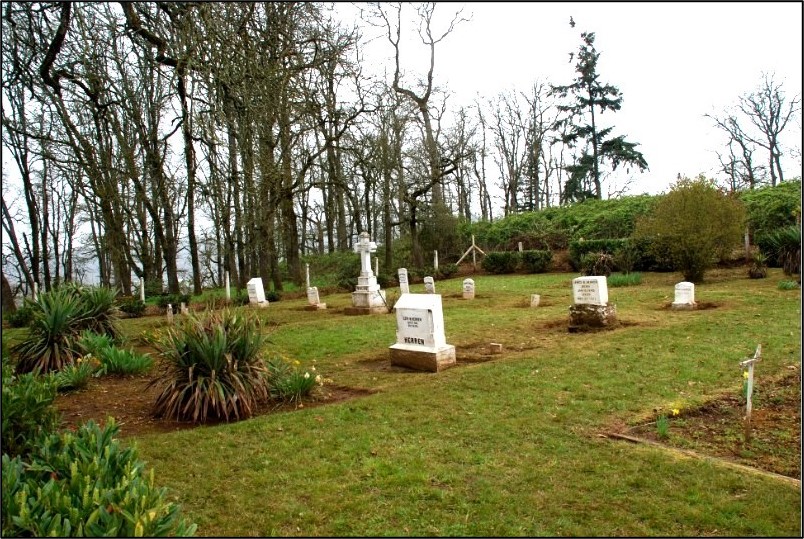
Photo from FindAGrave, dated 2009 (not what it looks like today)

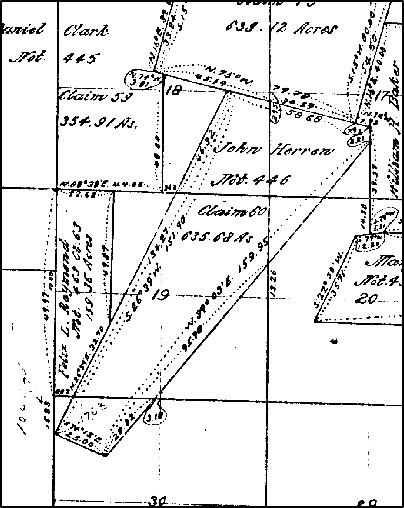
Let’s go back to the beginning.  The Herren cemetery was established on the original 635-acre Donation Land Claim of John and Theodoshia (“Dosha”) (Robbins) Herren.  The Herrens were first to come west, crossing the Oregon Trail in 1845, and notably took the disastrous Meek Cut-off across Central Oregon.  You can read by this couple here and their trip here.

John Herren’s Donation Land Claim

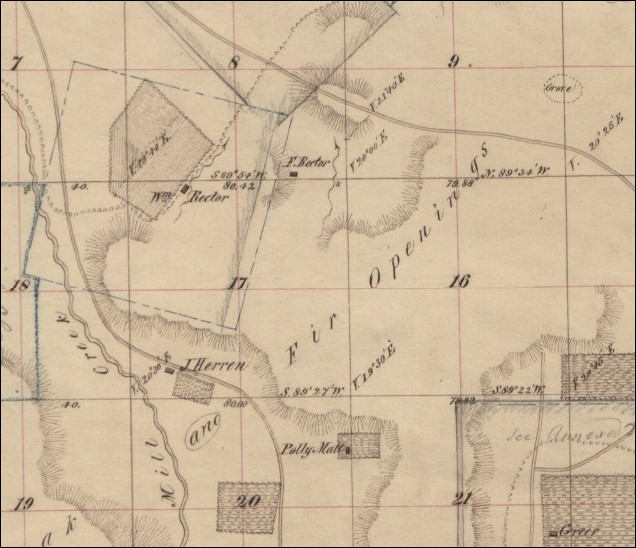
The strangely oblong shaped piece of land that John and Dosha settled on was southeast of the city of Salem, and included part of a ridge – overlooking the future site of the Oregon State Penitentiary to the north and overlooking Mill Creek and the future site of Turner to the south.  An early survey map even marks the Herren house along the Salem to Turner road.

The cemetery is located on the ridge above the “J. Herren” house

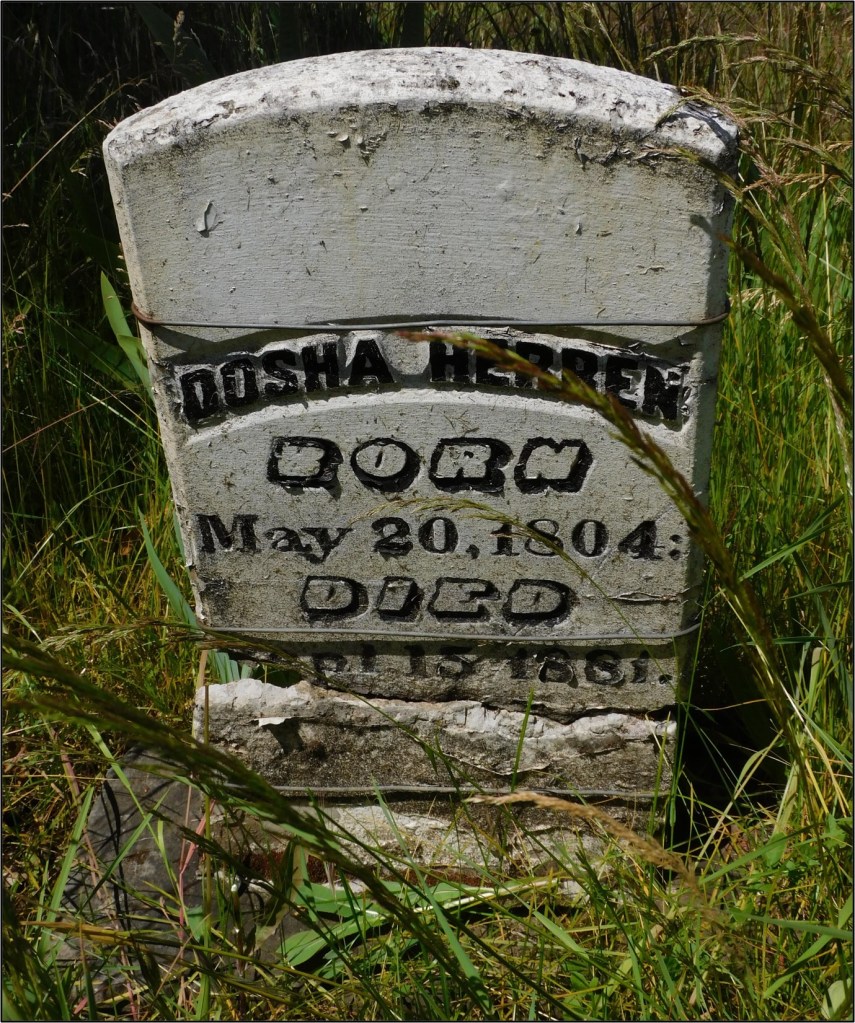
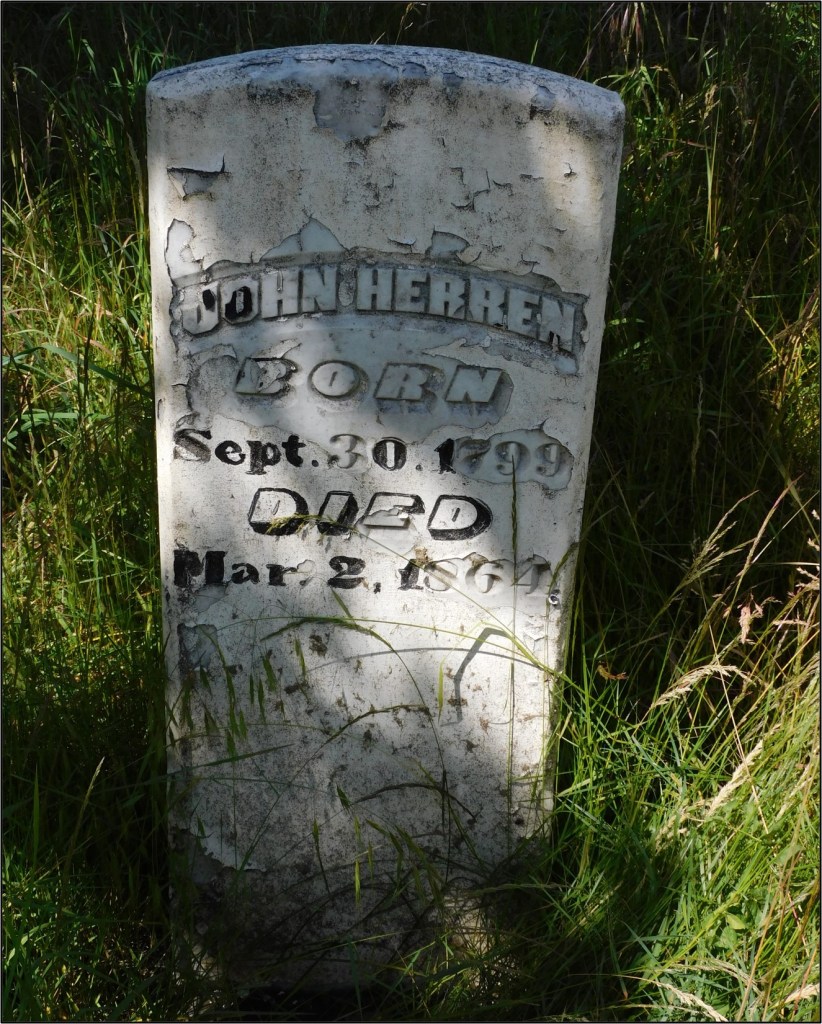
On the ridge above their house was the Herren cemetery.  The earliest burial seems to be that of John Herren himself, who died in March of 1864.  Several grandchildren, Charles C. Herren in 1868, Olevia Herren in 1874, and Nannie Welch in 1872 were also buried there.  Dosha (Robbins) Herren died in 1881 and was buried beside her husband John.

Theodoshia (Robbins) Herren
John Daniel Herren

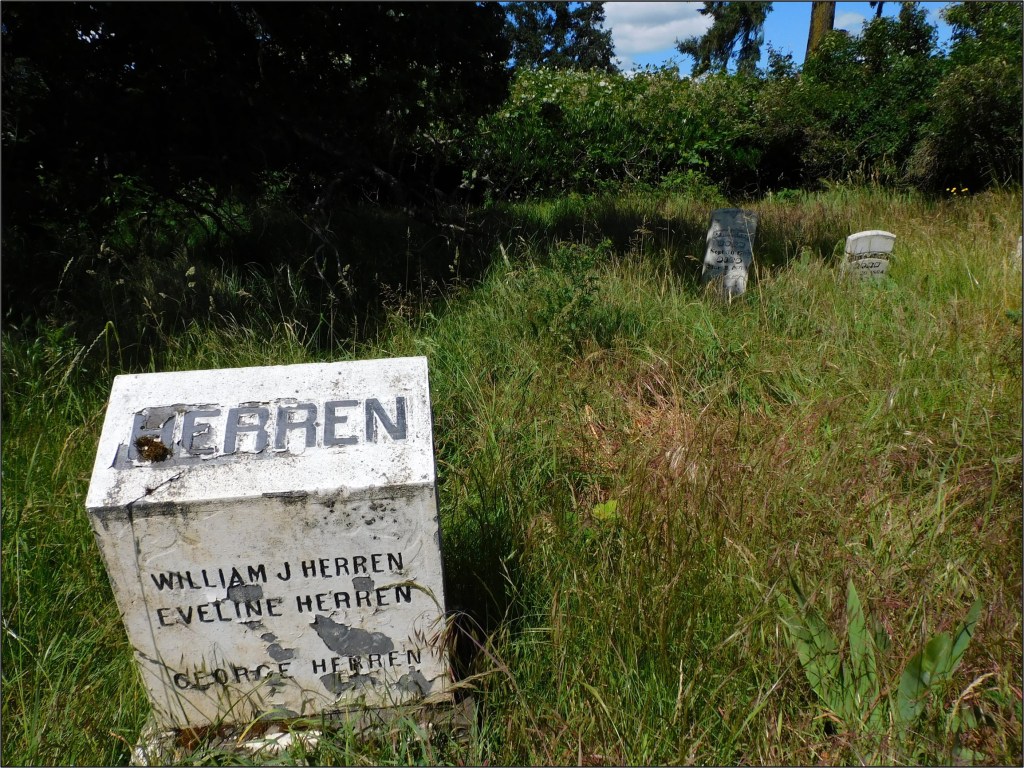
Over the years more family followed, including William Jackson Herren (1891) and his wife Nancy Evaline (1905), Elizabeth Columbia (Herren) Hastay (1881, seemingly unmarked), James R. Herren (1887), Levi M. Herren (1914), and additional grandchildren.  At least one nephew of John Herren, Joseph Garrison, was also buried in the cemetery in 1867.

William Jackson Herren and wife, with John and Dosha buried behind

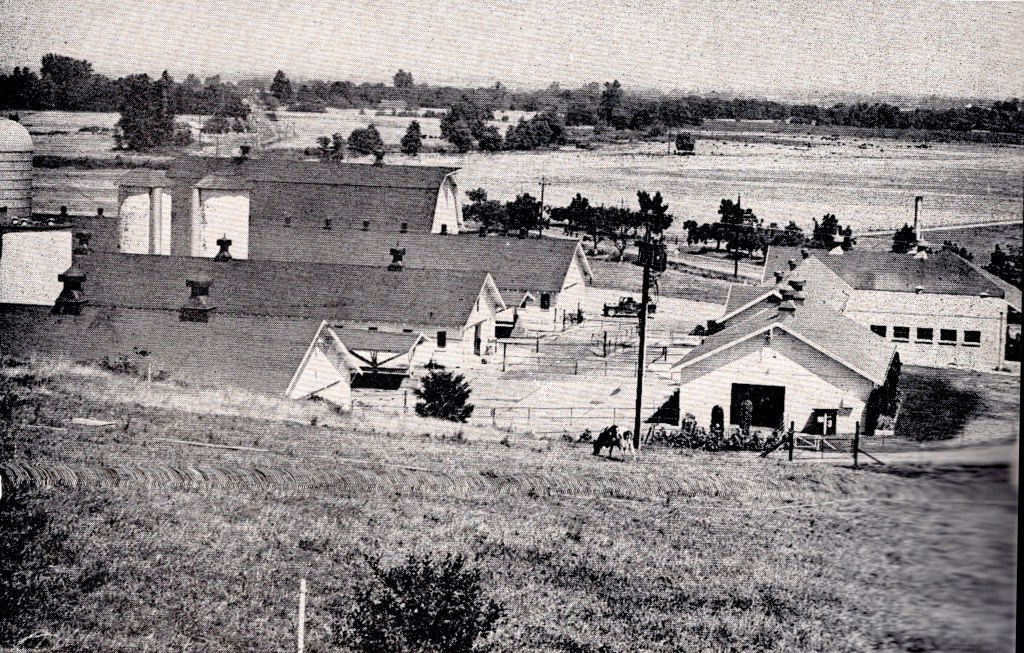
The Herren family is said to have sold some or all of their property to the state.  I have yet to identify when this occurred but the Oregon State Reform School first operated near the cemetery beginning in 1891.  After the school moved in 1929, it operated as the Farm Annex of the Oregon State Penitentiary

View of the Farm Annex in operation taken from near the cemetery location

from 1929 to 1990.  Farm operations were gradually phased out at the site until it closed its doors permanently in 2021.  A news article from 2022 states:

“In 1889 the State purchased the land for a reform school, the Oregon State Training School for Boys. After that relocated, the Oregon State Penitentiary began developing a farm annex in 19289, using forced prison labor to raise sheep, pigs, turkeys, rabbits, bees, and crops. By 1959 the State had expanded the farm to more than 2,089 acres. The State farm annex shut down over two decades ago, leaving much of the land unused, except for MCCI [Mill Creek Correctional Institution], a minimum-security prison, which was housed in the former reform school on a 390-acre chunk of the land. That site includes an unused cemetery from another previous owner of some of the land, the Heron (sic) family.”

Location of cemetery in relation to Farm Annex buildings

In 2023 the property was sold to Clutch Industries, under the name Herron (sic) Crossing LLC.  Before the sale, when it was initially announced that the state was going to be auctioning the property a descendant of another nearby original land owner claimed there were Native American remains buried nearby also.  An online article states the following:

“A state archaeologist, John Pouley, said an agreement signed by DOC [Department of Corrections] and the Oregon Historic Preservation Office outlined precautions taken to consult with historic groups and local tribes. DOC spokeswoman Betty Bernt said there was “no evidence of human remains at the archaeological site other than the [Heron (sic) family] cemetery,” in which 20 graves are still visible from 1864 to 1922. She did not say what research was done to reach that conclusion.”
Being maintained by the Oregon State Penitentiary meant that the cemetery was well cared for.  The prisoners who worked outside at the Farm Annex mowed the lawn, tended the iris beds, and kept the gravestones upright and in good condition.

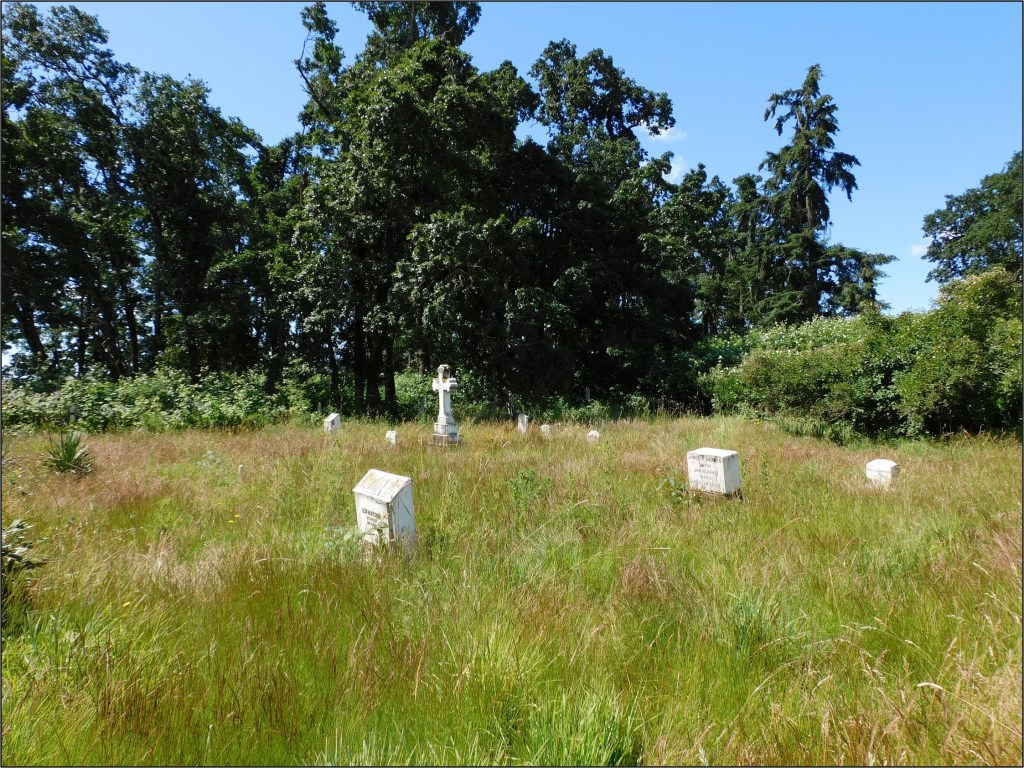
When in 2023 the cemetery was sold to a private owner the condition changed.  While the cemetery is supposedly open to the public you must cross the company’s private property to access it.  Now instead of a prison escort you need to get a company escort.  In the past the cemetery was well maintained.  This is what it looks like today:

The cemetery today (compare to photo above from FindAgrave in 2009)

The grass is overgrown.  The iris are lost in the weed thicket.  Gravestones are laying over.  The writing on the markers is starting to crumble.  How much longer will this cemetery even be in existence?  This isn’t the first cemetery our family has had to worry about, and sadly it won’t be the last.

2024 Robbins Reunion in Oregon

On Saturday, July 20th, 2024, by popular demand, there will be another Robbins Reunion in Oregon.  Meeting again at Feyrer County Park just outside of Molalla, Oregon, this reunion is open to anyone related to the Robbins family who would like to come and visit and share family history.

This past summer’s very successful reunion was meant to be a “one-off”, a chance to report on the 2022 bicentennial reunion in Decatur County, Indiana, but the attendees all said they’d like to resume the former annual Oregon reunions, so here we go!

The park is located about 3 miles east of Molalla on S. Feyrer Park Road.  From downtown Molalla take E. Main Street to E. Mathias Road, travel south on that road a couple of blocks, and then turn east on S. Feyrer.  That road takes you to the park.  Picnic #2 is once again where the Robbins family will be gathering.  Be aware that there is an $8 parking fee.  Molalla is about 15 miles east of Interstate-5 at Woodburn or 16 miles south of 99E at Oregon City.

Even if you cannot come to this reunion, it would help if anyone reading this blog could pass along the word to anyone they think might be interested.  Getting word out is the key to a successful reunion.

I plan to have limited updates about the reunion in this blog; there will be a Facebook event page for anyone who would like to follow the reunion there (you can always “friend” me for an invite); and I have created an email mailing list.  If you would like to be included on the email list be sure to let me know by sending a message to:  oregonrobbinsreunion@gmail.com

1880s Calling Cards

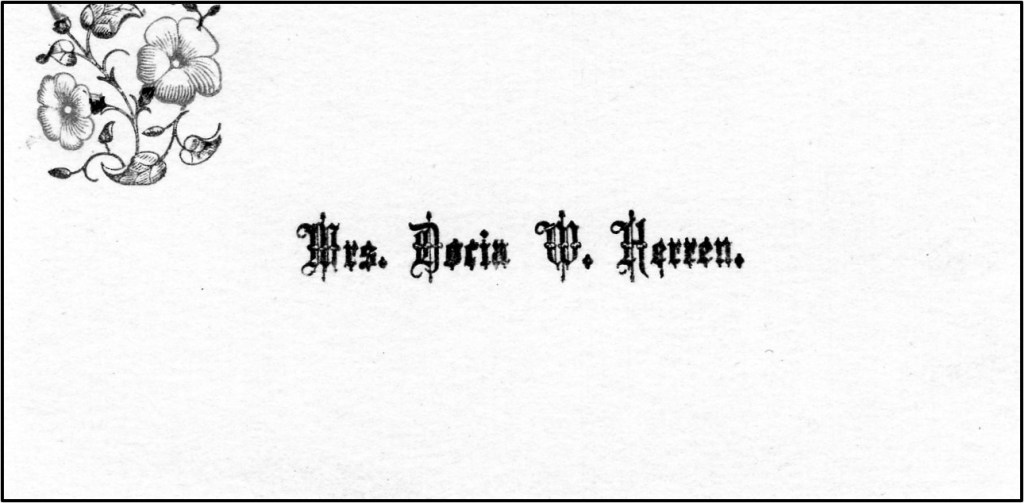
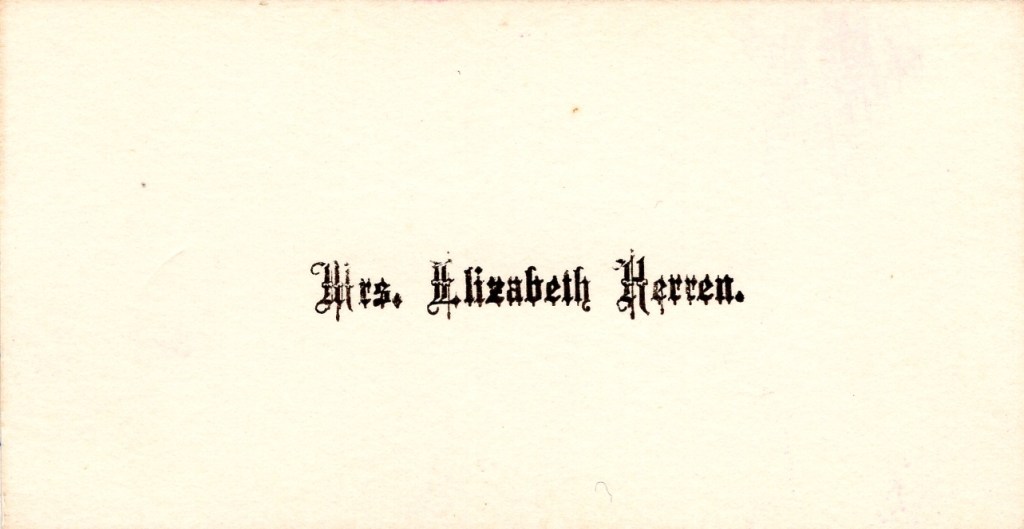
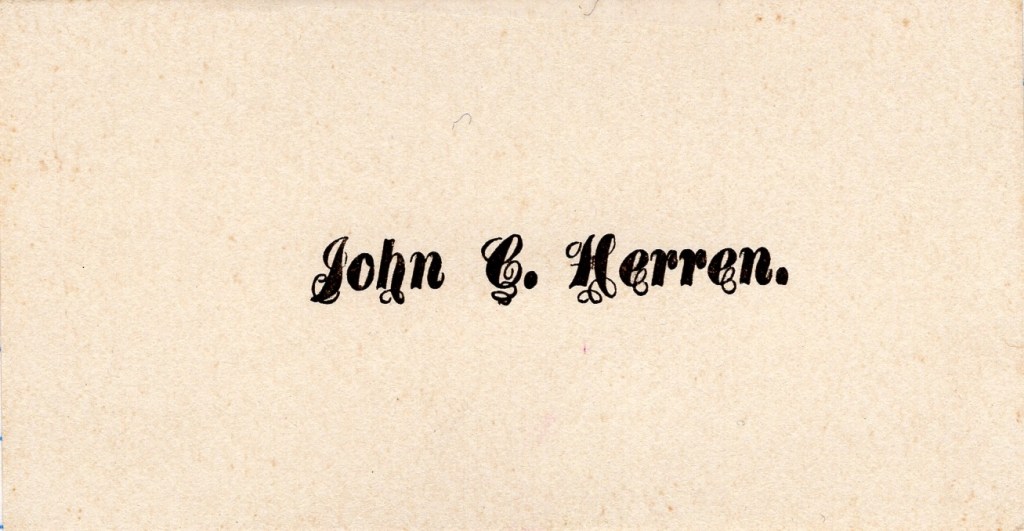
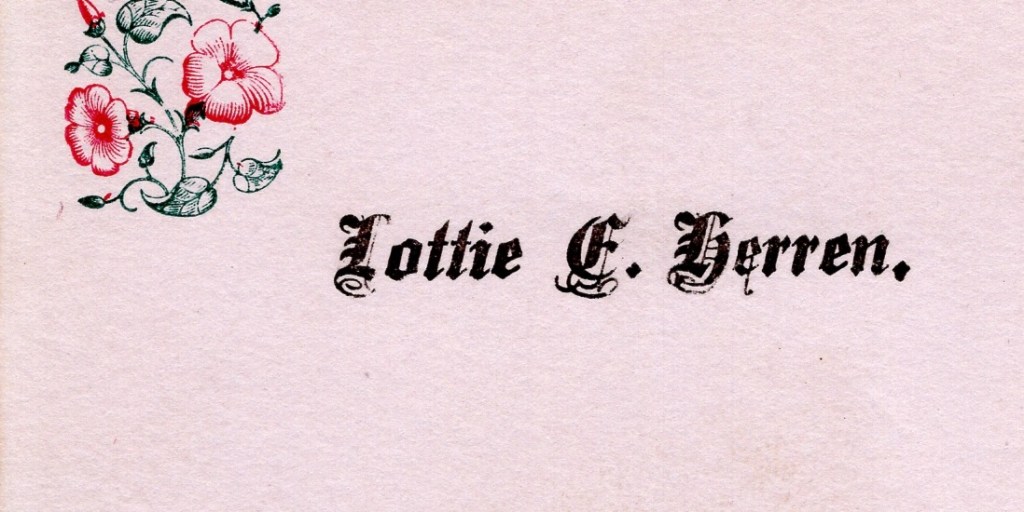
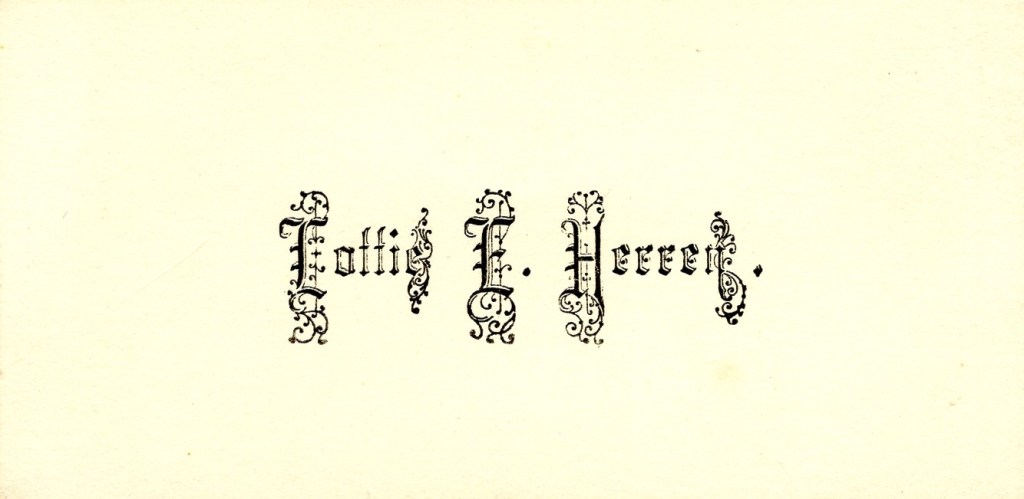
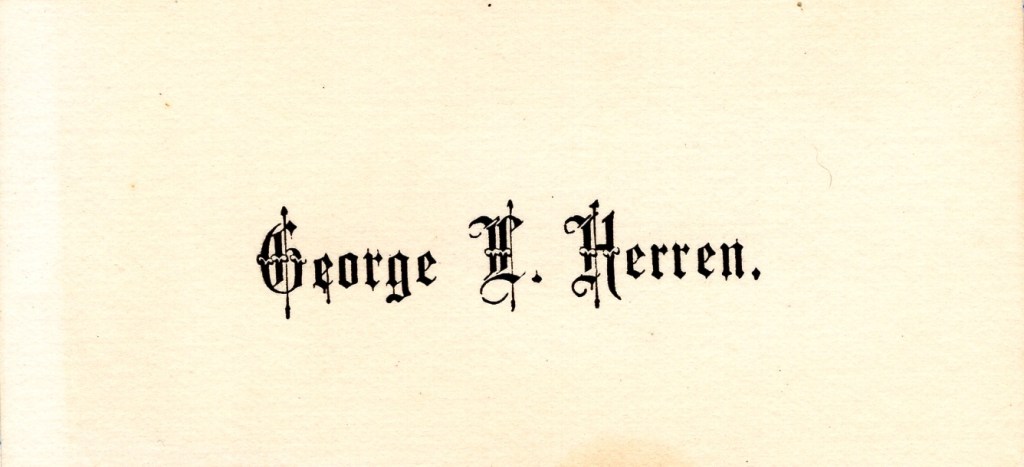
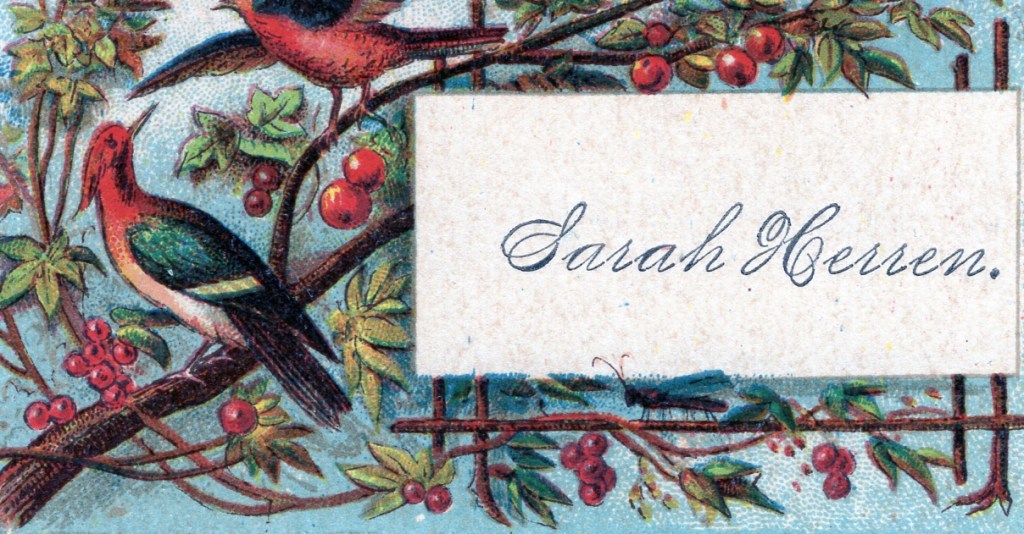
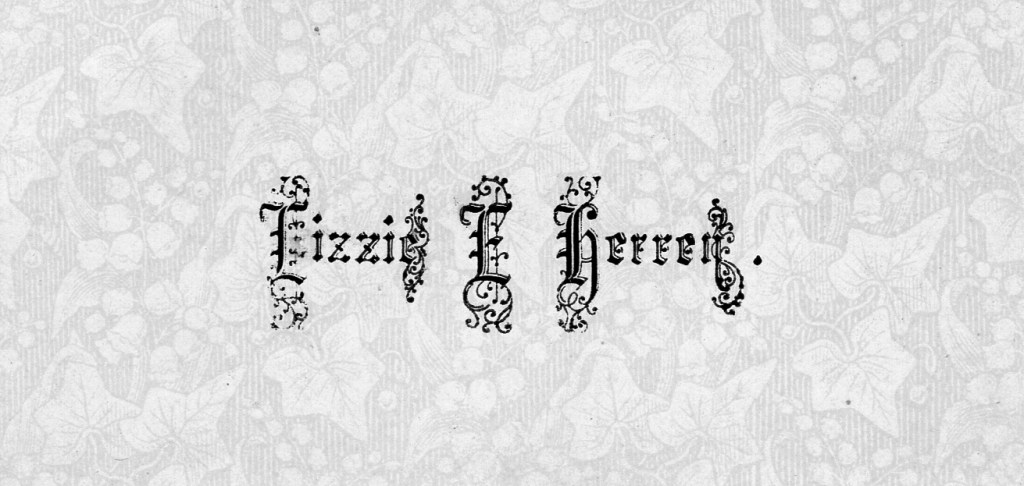
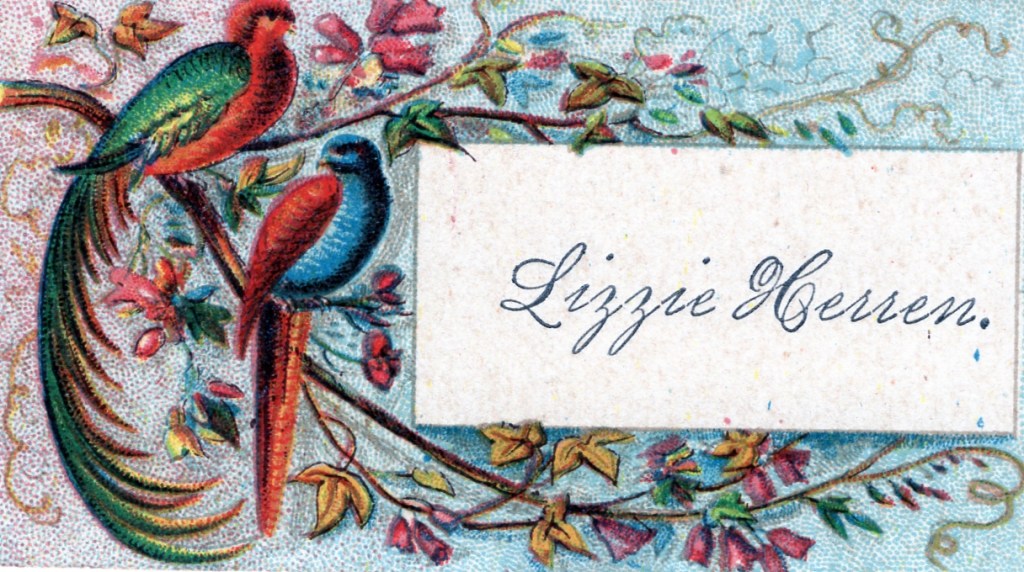
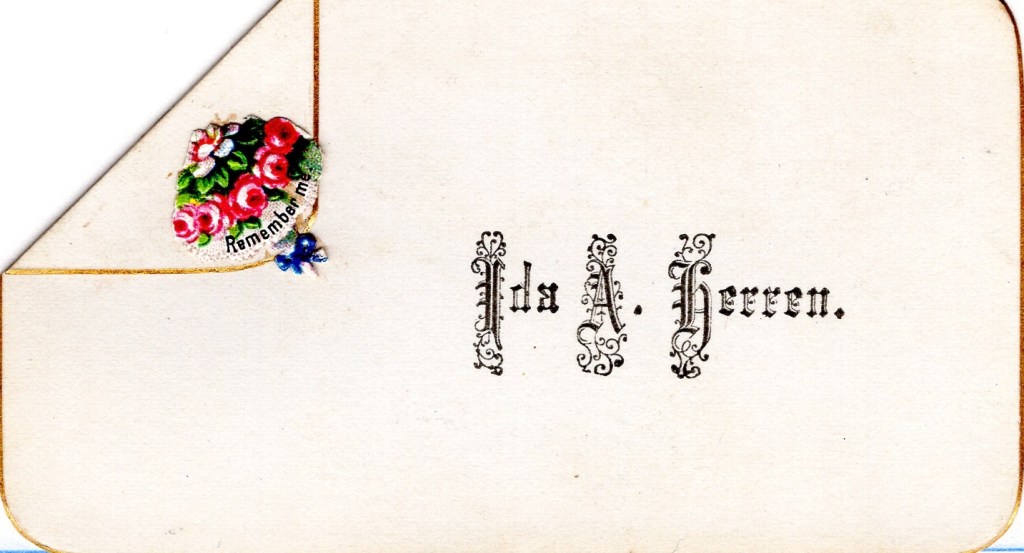
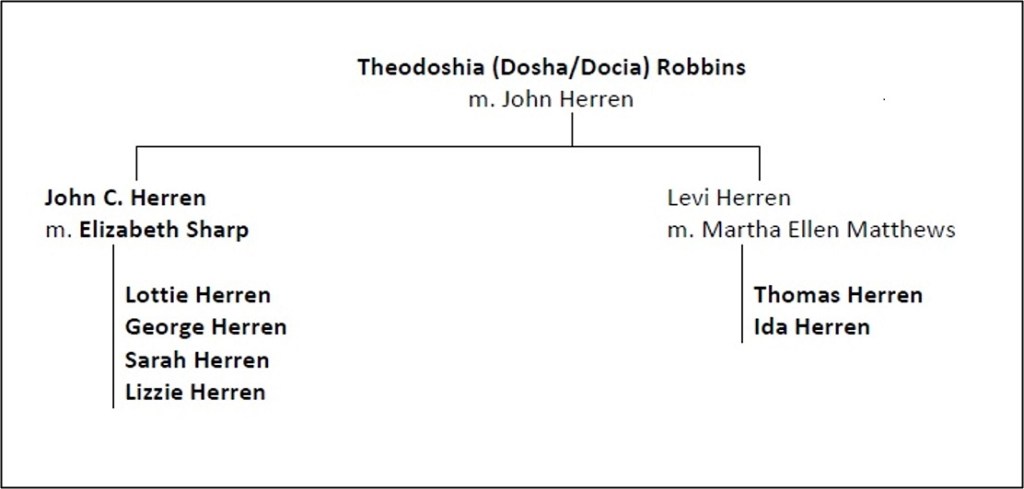
At last summer’s Robbins reunion cousin Sherrill Beck (a Jacob Robbins descendant) handed me an envelope containing some old calling cards.  I didn’t have time to really study them until recently.  What is interesting is that the cards all come from the Theodoshia (Robbins) Herren branch of the family – Theodoshia being a first-cousin to Sherrill’s Jacob.  Obviously there were either visitations back and forth between the younger members of the family or they included them in letters they wrote each other. The Herrens and the Jacob Robbins family had a close relationship: I’ve previously written of William J. Herrens’ unsuccessful attempt to entice his cousin Jacob in accompanying him in a return visit to Decatur County, Indiana, in 1877.

According to a Wikipedia article on visiting or calling cards, by the 19th century, men and women needed personalized cars to maintain their social status.  Cards were left at homes, sent to individuals, or exchanged in person for various social purposes.  They became an indispensable tool of etiquette. 

Another website quoted an etiquette book from 1882:  “Callers should always be provided with cards.  A gentleman should carry them loose in a convenient pocket; but a lady may use a card case.  No matter how many members of the family you call upon, you send in but one card.  Where servants are not kept, and you are met at the door by the lady herself, of course there is no use for a card.  If you call upon a friend who has a visitor, send in but one card; but if they are not at home, leave a card for each.  Calls of pure ceremony are sometimes made by simply handing in a card.”

The etiquette on the Oregon frontier and among family members may have been less formalized as I’m not sure close relatives needed to follow the formality of the very detailed social rules and conventions.  But I’m sure it was a good way for young people, in particular, to share their calling “availability” to others or to simply exchange cards with each other, either in person or by mail.

What’s particularly interesting about these calling cards is that I can date most of them to the early 1880s because we know Docia (Robbins) Herren died in 1881, several of the cards belonged to three siblings who died of diphtheria in June of 1883, and Ida Herren was married in 1884.  

Here is a list of the relatives with calling cards.

  • Mrs. Docia W. Herren (1804-1881)
  • George L. Herren (1864-1883)
  • Lizzie E. Herren (1868-1883)  (3 cards)
  • Sarah Herren (1866-1883)
  • Lottie E. Herren (1854-1896)  (2 cards)
  • John C. Herren (1828-1898)
  • Mrs. Elizabeth Herren (1833-1910)
  • Thomas L. Herren (1862-1922)
  • Ida A. Herren (1864-1936) (married Ralph Morris in 1884)

And here is a simplified family tree showing the relationships of those who have calling cards (names in bold):

Besides the cards shown above here are the rest of these Herren family artifacts from the early 1880s:

[Jacob Robbins-William Robbins-Theodoshia (Dosha/Docia) (Robbins) Herren]

Oregon Reunion a Success

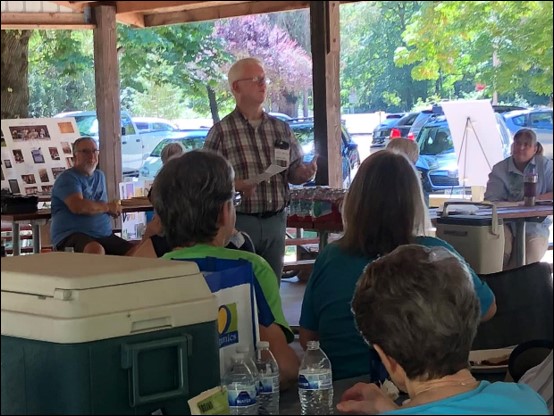
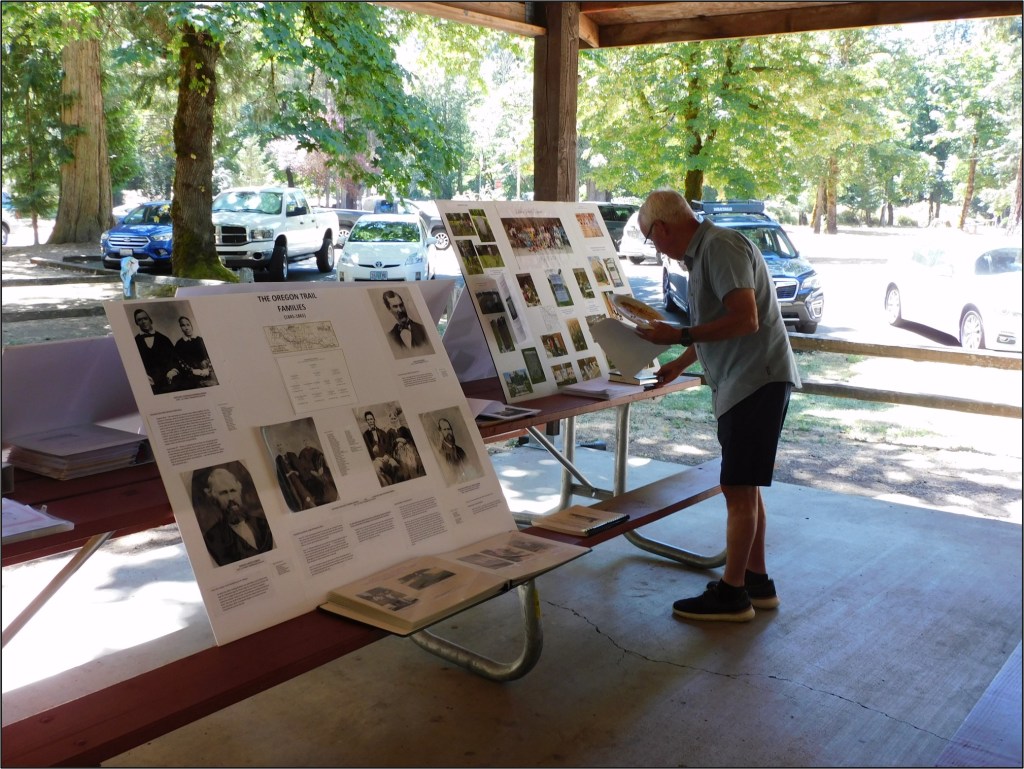
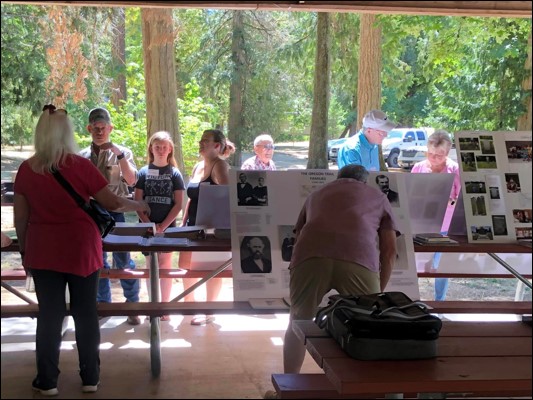
The 2023 Oregon Robbins Reunion was a resounding success! We had between 50 and 60 attendees, about the same as last year’s reunion in Decatur County, Indiana. There were representatives from several Oregon pioneer ancestors: Nathaniel and Nancy Robbins, John and Theodoshia (Robbins) Herren, John Hudson Robbins, and Jacob and Sarah (Spilman) Robbins. There were also several other long-time Robbins family researchers who connect much further back through our pre-Indiana ancestors, as well as others who have Robbins ancestors but weren’t sure if they were connected to our specific family or not (it’s hard to say – our ancestors being on this continent for four hundred years – there are a lot of branches of the Robbins family!).

The four Oregon cousins who attended last year’s reunion in Indiana were all present: Sherrill, Nancy, Kathy, and myself.

Many of us at this reunion hadn’t seen each other since the Oregon reunions back in the 1990s or early 2000s so it was nice to get reacquainted. There were several actual Robbins’s in attendance too: James (“Jim”) DeSpain Robbins, a descendant of Jacob through son Harvey, and John Robbins and family, descendants of Jacob through son Levi.

I had originally planned this reunion as a one-off, a follow-up to last year’s bicentennial family reunion in Indiana, but the folks who came to this reunion want to keep it going, so we will plan for a 2024 reunion! What’s good about that is if you weren’t able to come to this reunion, you can always come next year, or the year after (?). And anybody interested in Robbins family history are welcome.

Below are several photos, a couple by me and a couple by cousin Brenda Pudwill.

The Huckleberrys

Ella Elmira (or Elmyra) Robbins was born in 1871 in Decatur County, Indiana, a daughter of James Gilman and Elmira (Stout) Robbins.  She was married to the Rev. John Fielding Huckleberry in 1893 and they had five children:  Evermont Robbins, William Carey, Mary Elmyra, Helen Rebecca, and Florence Naomi.

The Huckleberrys moved to Oregon in about 1921 (another interesting Decatur County to Oregon connection), though daughters Mary Elmyra (who had married George Vandiver) and Helen Rebecca seemed to have remained in Indiana.

The Rev. John Fielding Huckleberry, born in 1864, had graduated from Franklin College in Franklin, Johnson County, Indiana.  He served five years as pastor of the Mount Pleasant Baptist Church in Decatur County and well as other pastorates in Indiana before moving to Oregon.  The Rev. Huckleberry died in McMinnville, Oregon, in 1950.  At the time his wife was staying with their daughter Mary Vandiver back in Indiana.  She flew out to be with him at the time of his death.  Ella lived only five more years, dying in 1955, in Oregon.

Two of their children who came to Oregon, William Carey Huckleberry and Florence Naomi Huckleberry, appear to have never married.  They died in 1967 and 1972, respectively.

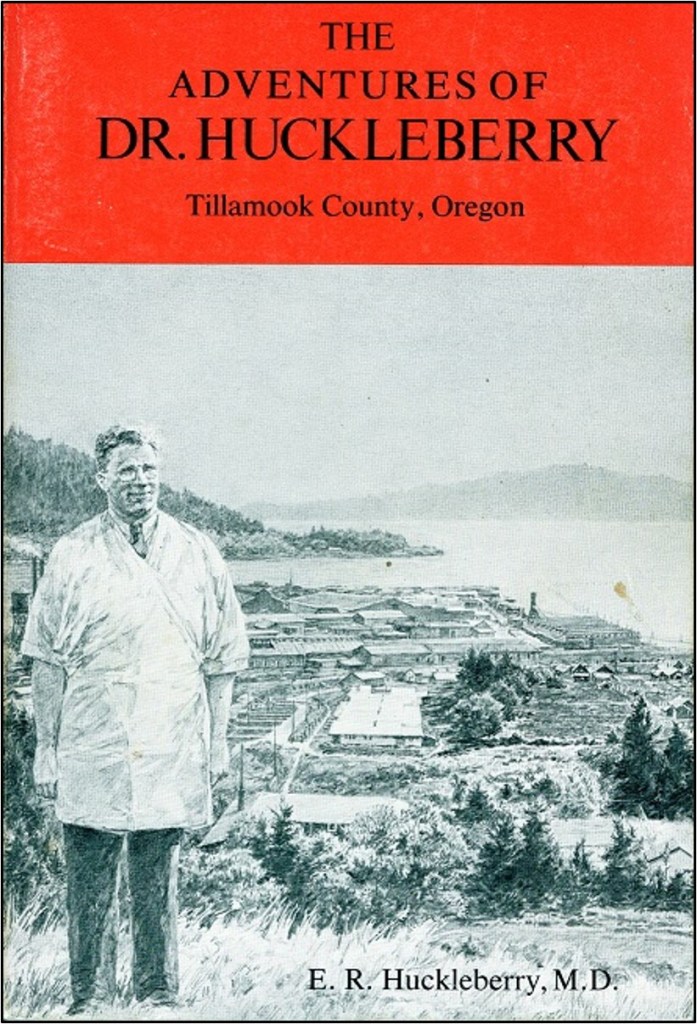
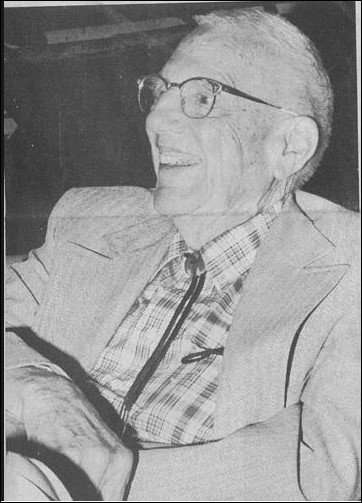
The older son, Evermont Robbins Huckleberry, however, led a storied life that he wrote about in his book The Adventures of Dr. Huckleberry, Tillamook County, Oregon.  Dr. E. R. Huckleberry received his MD from Rush Medical College in Chicago and then served an internship at Los Angeles County Hospital.  He spent the next thirty years practicing medicine in Tillamook County on the Oregon Coast, McMinnville, and Umatilla, Oregon.  After a stint in Texas, he moved to Utah where he retired as a physician.  Dr. Huckleberry died in 1996 in Salt Lake City at the age of 102!

Tillamook County established the Tillamook County Huckleberry Health Fair in his honor, which ran annually from 1983 to 2017.  The fair was an event to help local residents understand their health resources, as well as providing needed low-cost screenings and other services.

Dr. Huckleberry, in his very long life, was also a military veteran, missionary, teacher, author, and family man.  At the time of his death Dr. Huckleberry had three great-great-grandchildren.  Another long lived Robbins family member!

[Jacob Robbins-William Robbins-William Robbins Jr.-James Gilman Robbins-Ella (Robbins) Huckleberry]

Oregon Reunions in the Past

There have been many years of Robbins and allied family reunions in Oregon.  Originally they were large reunions, with the original Oregon Trail pioneers in attendance, but as families grew and married into other families and moved away from the home place, over time the reunions sometimes fractured into separate parts or died way altogether.

While most families hold reunions at some point, the Oregon reunions might have originally been driven by the shared experience of coming across the Oregon Trail and an early organization that helped bring pioneers together.

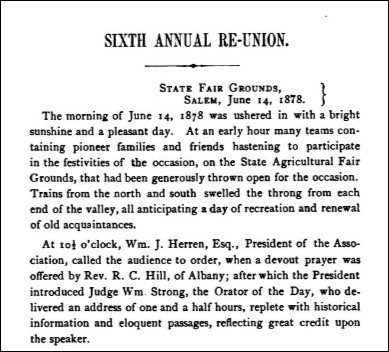
The Oregon Pioneer Association was established in 1867, with one of the leading founders being William Jackson Herren, son of Theodoshia (Robbins) Herren.  He was elected president of the organization in 1877, the same year he returned to Decatur County, Indiana, to visit his Robbins cousins that he hadn’t seen in decades.

The Association was made up of members who had come to Oregon prior to January 1, 1854, and each year they held meetings of members, many of whom were members of the Robbins and Herren families.  As the original pioneers died out, the organization dwindled, eventually being subsumed into the Sons and Daughters of Oregon Pioneers.  The Oregon Pioneer Associations’ annually published Transactions listed those members and other pioneers who had passed away over the years.

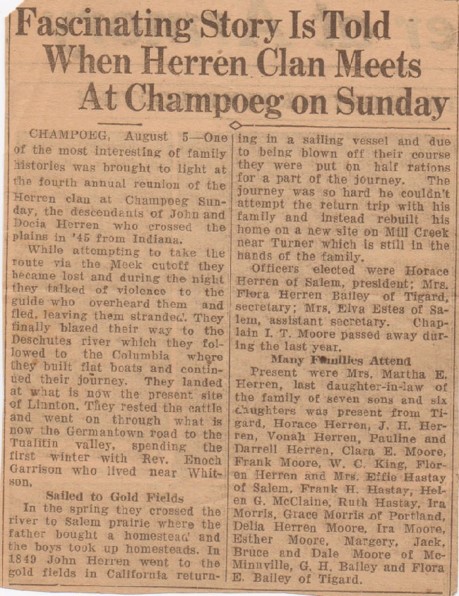
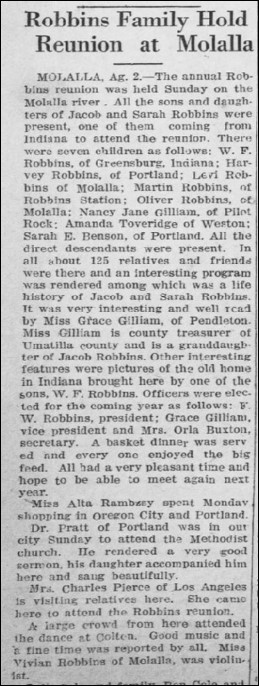
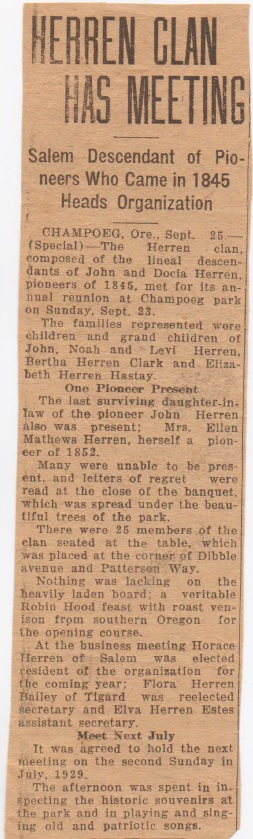
By the time the pioneer group was dwindling away around the turn of the last century, family reunions started being held.  Original pioneers were dying off, families were spreading out, many moving off the farm to look for jobs in urban areas both near and far.  For the Robbins family, 1922 was the banner year, with large reunions in Decatur County, Indiana, and in Oregon.  As families grew and locations changed, the various reunion groups separated, then rejoined, then died away, only to be replaced by something new.

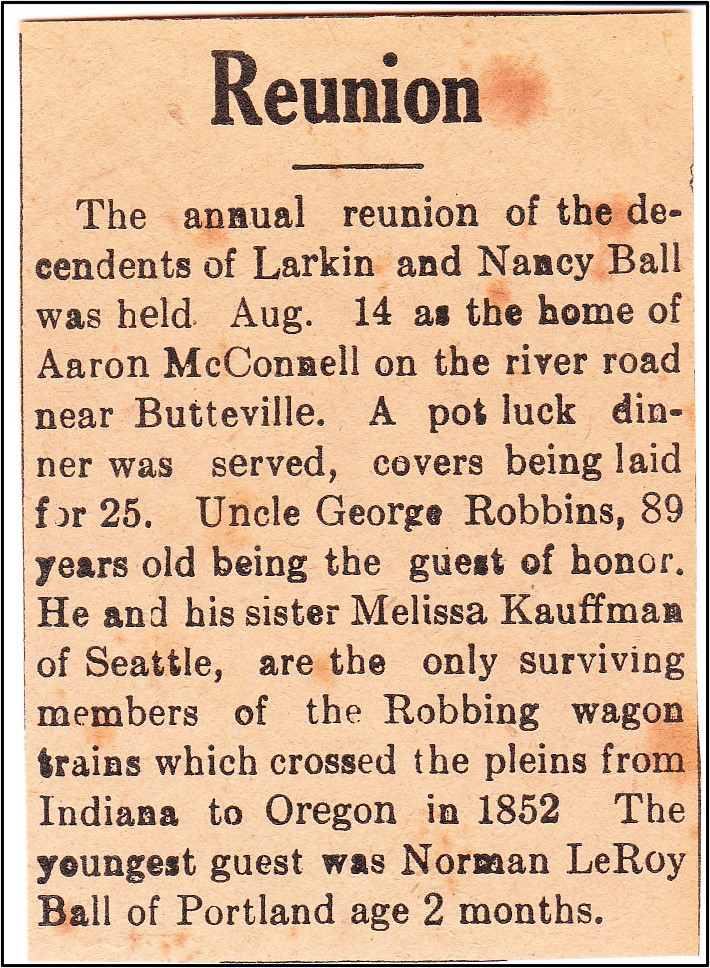
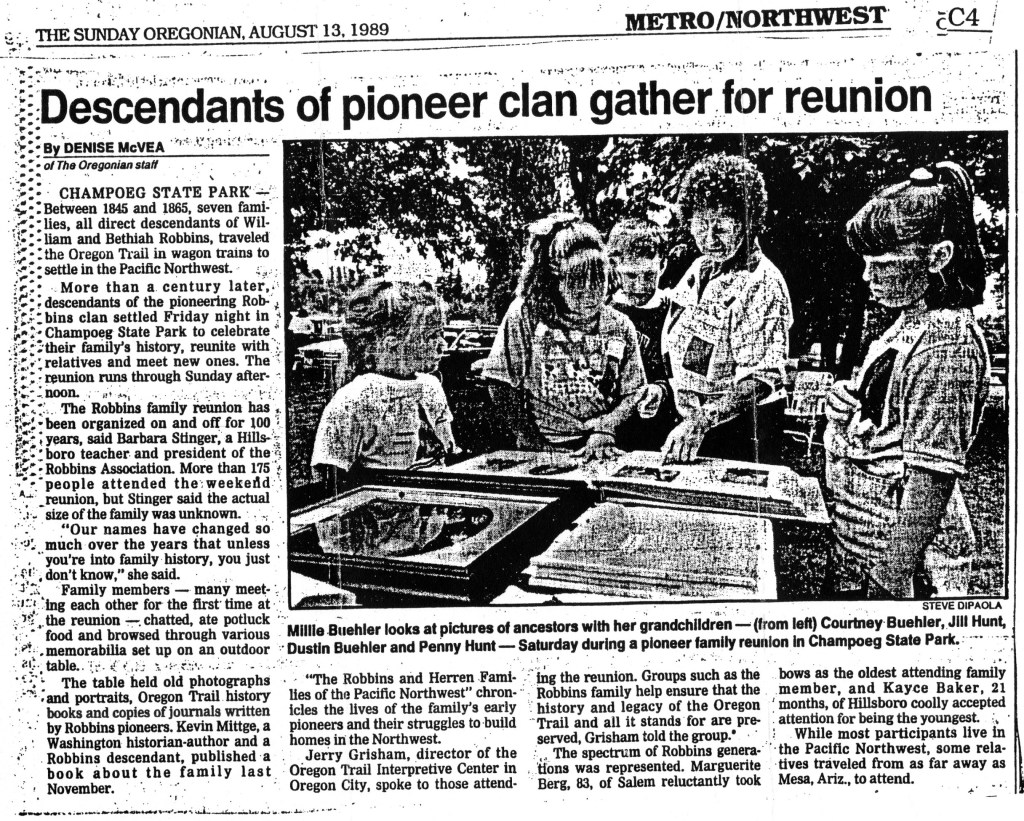
I have collected articles over the years about some of these reunions and I include a few of them here.

I started attending Robbins reunions in 1977, and they continued on until the early 2000s before petering out.  In those years the reunions were held in Camas, Washington; Champoeg State Park; Willamette Mission State Park; and finally Silver Falls State Park.  The 2023 Robbins Reunion is being held at Feyrer Park in Molalla, a long-time location of reunions of the Jacob Robbins family.  For more information on the upcoming reunion click on the 2023 Oregon Robbins Reunion above.